How Atsusa works
The detail behind the homepage: the science of heat, who it is for and what a run looks like afterwards. Get the test build
Three steps between you and the warning.
Heart rate, how it recovers, skin temperature where a sensor is available, and the real heat around you combine into one number: your estimated core temperature, minute by minute.
Atsusa reads Wet-Bulb Globe Temperature, the real-feel measure that accounts for heat and humidity, and feeds it into the estimate throughout your session.
As the estimate climbs toward the danger line, alerts escalate through five tiers and arrive as haptics you'll feel without looking: escalating triple-tap for warning, continuous for critical.
Heat illness is preventable. Runners still collapse every summer.
Warm, humid race days fill medical tents. The pattern is the same: a strong first half, then heat catches up after halfway and the runner pushes on because the finish is close.
Atsusa stops it before it starts, by putting the warning on your wrist while you can still act on it.
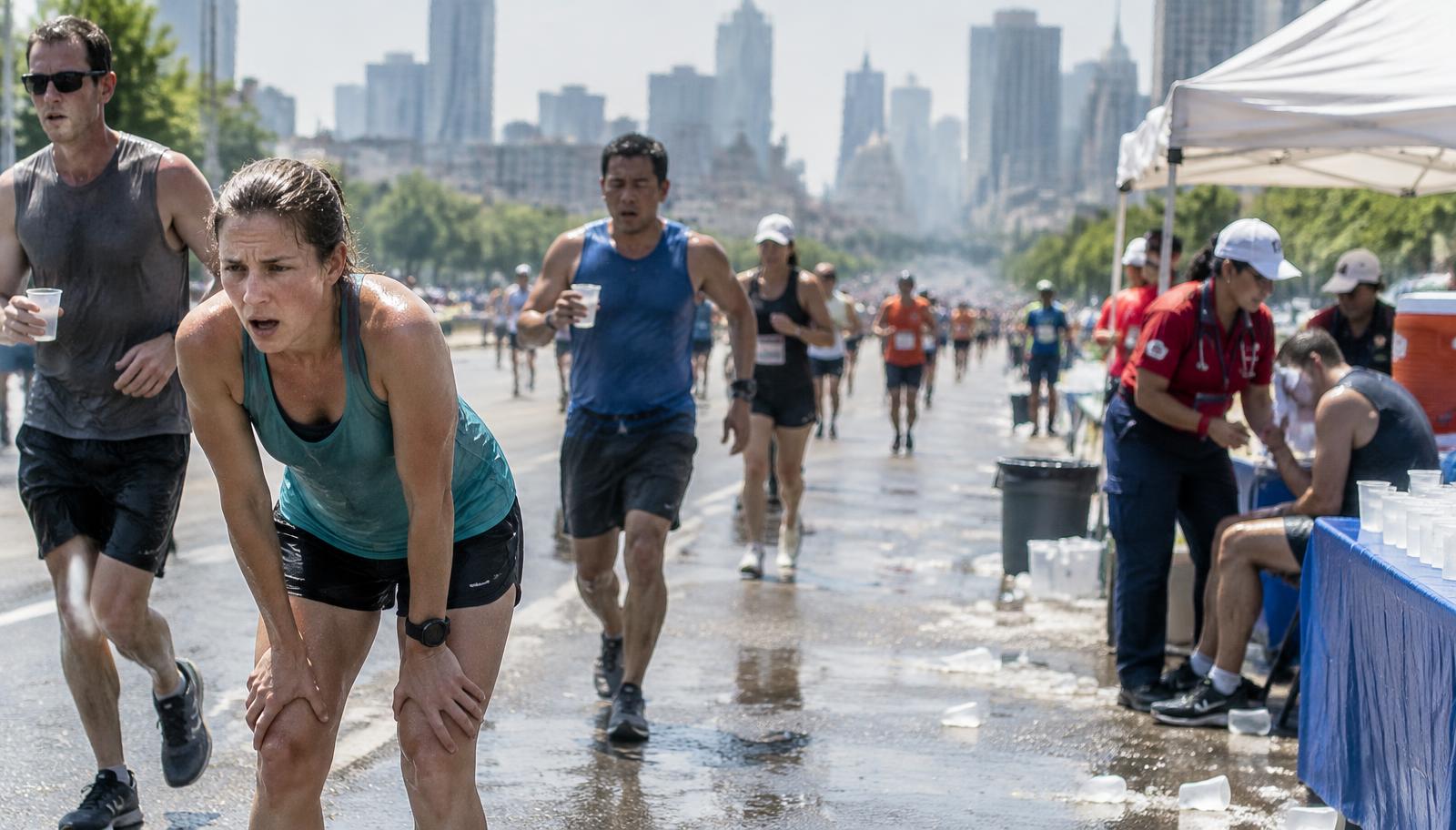
Heat illness is one of the most common reasons runners end up in the medical tent on warm race days.
Core temperature I hit at the finish of a half marathon, before anyone, including me, realised anything was wrong.
Sweating stops and judgement fades before the runner in trouble feels it.
Heat illness arrives before you notice it.
A tempo run in July, a long run that starts late, a race on a muggy morning. Heat illness doesn't care how fit you are.
Your body sends signals. The danger is that by the time you read them, you've already crossed into a state where reading them is hard. These are the warning signs I didn't feel until I was at 40.7°C (105.3°F).

WBGT climbs without feeling obvious. Humidity especially steals your cooling.
Sweat stops before you feel bad. The absence is the warning you miss.
Holding pace feels reasonable. It isn't. The decision centre goes first.
Pale, clammy skin is a late sign that your body is losing the fight.
Built for runners who don't want to find their limit the hard way.
Whatever your distance, the danger is the same: core temperature climbs quietly while your legs still feel fine. Atsusa watches it for you, every run.
5k to 10k at threshold pace, where heat stacks up fastest.
Fine at 10k, empty by 15. The back half is where heat wins.
Hours exposed, climbs in full sun, and help a long way off.
Building up through summer without knowing your heat limit yet.
Why Atsusa exists.
Anton and the race medical crew cooled me down and, I'm certain, saved my life. Atsusa exists so the warning arrives earlier than the medical tent.
The estimate and its alert thresholds come from published heat physiology research on heart rate, skin temperature and WBGT, then get set to your own age and physiology.
My core temperature at the finish line of a half marathon.
A student collapsed and died at that same event. Same day, same heat.
I felt fine at 10k. By the line I couldn't sweat and my head wouldn't stay up.
Thresholds sit on estimated core temperature, built from real-feel heat and your own physiology, not averages.
No reviews or ratings here yet. User testing is only just starting. When people have used Atsusa in real heat, on training runs and race days, their words go in this section, and not a word before then.
The warning matters. What you do next matters more.
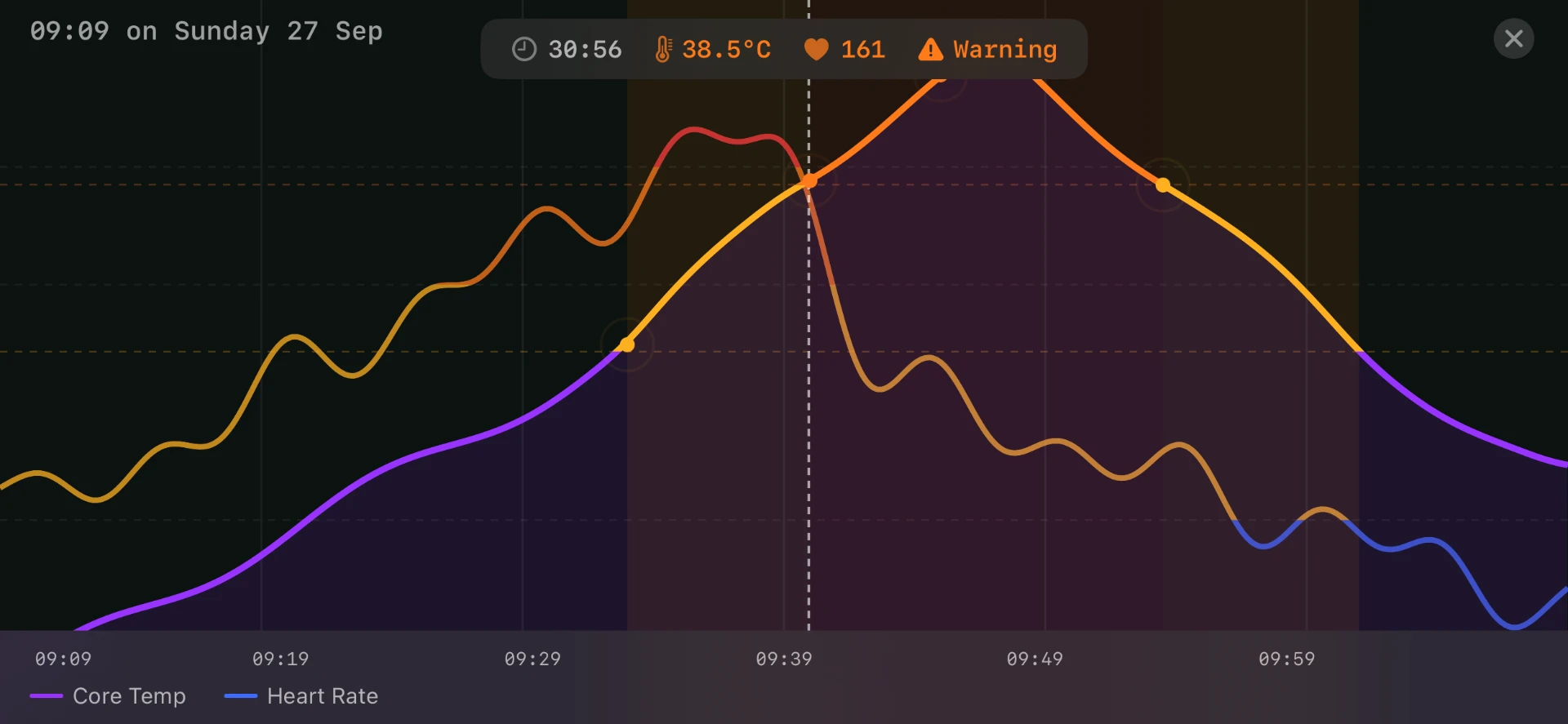
Your watch warns you during the run. Afterwards, your phone shows how your body responded. These two runs tell very different stories: one runner took action and cooled; the other kept pushing into dangerous territory.
Took action. Started cooling.
The runner eased off and cooled down. Heart rate fell first; estimated core temperature kept rising for a while before turning down. Stopping the effort doesn't mean the heat disappears immediately.
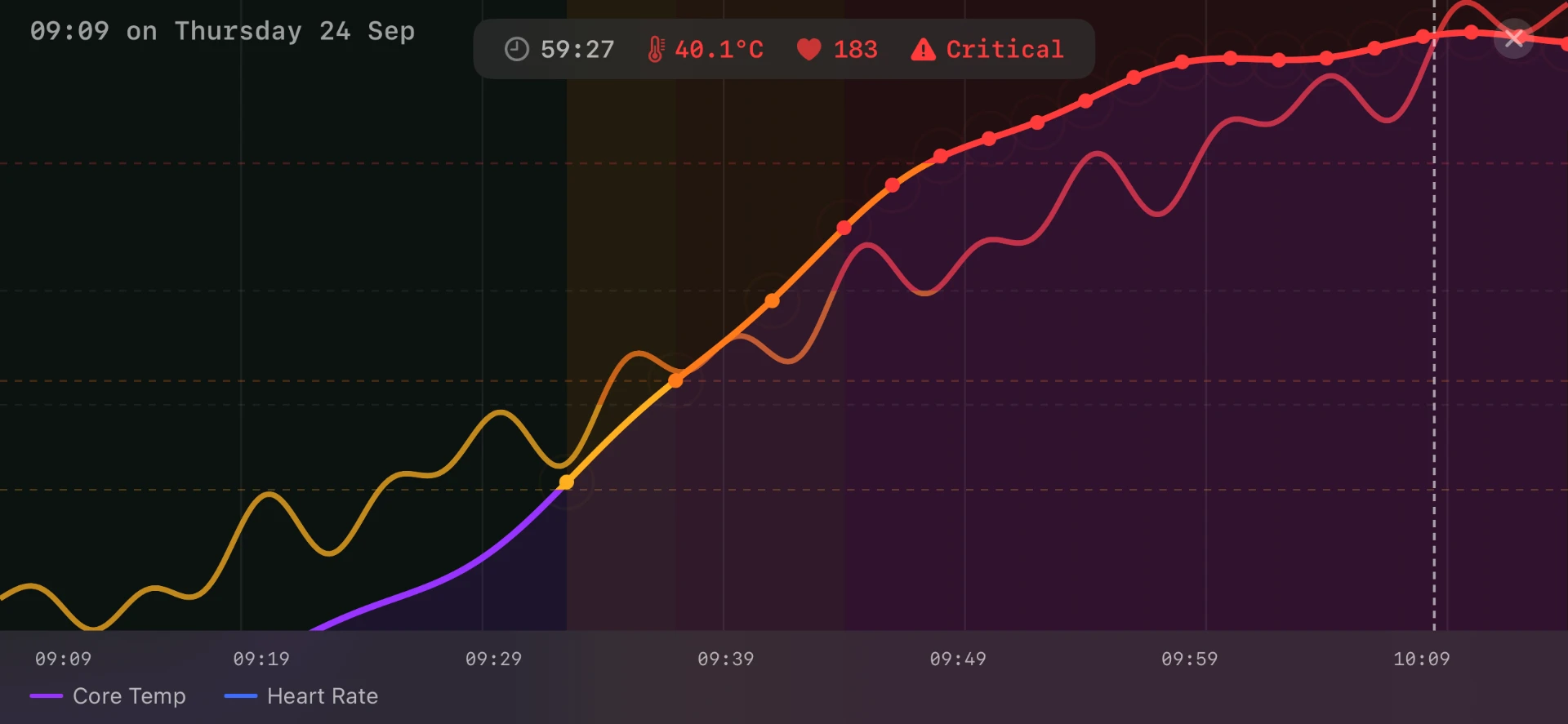
Kept pushing. Reached critical.
The runner continued. Estimated core temperature climbed into the critical zone, reaching 40.1°C at the highlighted point. The graph shows the cost of pushing on, not a target to test yourself against.
No finish time is worth your health.
Heatstroke can be fatal or cause lasting organ damage. This is bigger than one race, and recovery isn't always quick or complete. Respond early: stop the effort, get somewhere cool and start cooling down. Confusion, collapse or suspected heatstroke needs emergency medical help immediately—don't wait for a number on your watch.
These are two separate example runs, not a controlled comparison or a guarantee of protection. Core temperature is estimated, not measured. Atsusa is an early warning, not a diagnosis.
If you stop responding, Atsusa doesn't.
If a Critical alert goes unanswered, Atsusa enters Emergency mode automatically. It contacts your chosen person, a partner, a supervisor or a friend, and shares your location. You always have eight seconds to cancel with a single tap.
- Auto-escalates after unanswered Critical alerts
- Shares live location with your emergency contact
- 8-second countdown you can cancel anytime
- One-tap “I'm ok, cancel alert” escape